Insights
10 Things to Know About Event Production Services
Ten things corporate marketing and events teams should know before hiring an event production partner, from reading AV quotes to lighting design and venue AV clauses.
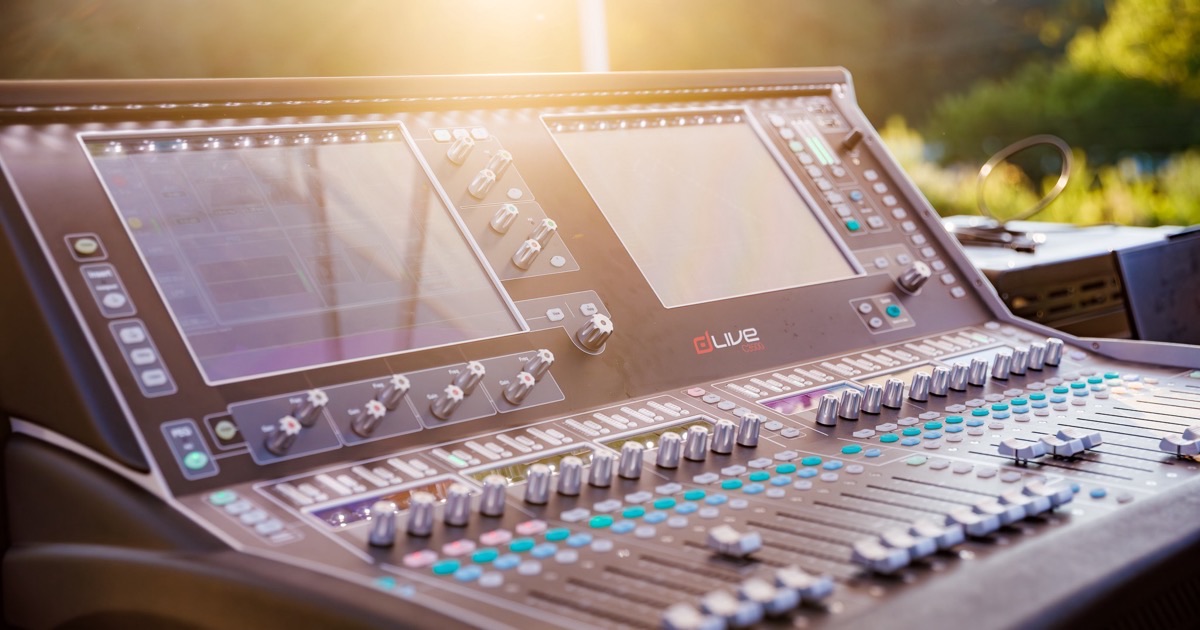
Ten things corporate marketing and events teams should know before hiring an event production partner, from reading AV quotes to lighting design and venue AV clauses.
If you work on a corporate marketing or events team, sooner or later a show lands on your desk. A sales kickoff, an executive mixer town hall, a product launch, a customer conference. The vision is yours, but the room is not. Everything the audience sees and hears comes from whoever you hire for production services, and the difference between a good partner and a cheap one shows up on stage, in front of your leadership, and all in real time.
Here are ten things worth knowing before you sign a production contract.
Some companies rent equipment. They drop off speakers and a stage, and the rest is your problem. A full event production partner designs the room to your ideas, builds the stage, runs the audio, video, and lighting, and calls the show once the doors open.
Both models have their place. A rental house is fine for a holiday party with a playlist and a microphone. A conference with twelve speakers, sponsor content, and a live stream needs a production team. The first question to ask any bidder is which one they actually are, because after all, its your brand on the line.
Two companies can quote the same L-Acoustics rig, and your show will sound completely different depending on who mixes on it. AV production is a craft. The audio engineer who rings out a room before doors will save you from the feedback squeal mid-keynote. The video engineer who checks every presenter's laptop at rehearsal is the reason your CFO's slides appear when she clicks.
When you compare bids, ask who is staffed on your show. Ask how long the A1 has been mixing corporate events, what software the content op is running, and whether the crew on the calls is the crew that shows up on site. Companies that are proud of their people will answer in specifics.
A stage and lighting rental quote that comes in 30 percent under the others usually isn't a bargain. It's missing things. Common omissions: power distribution, rigging hardware and labor, trucking, stagehands for load-in and load-out, backline, and spares.
Ask every bidder to itemize. You want to see the stage decks, the fixture counts, the labor calls, and the trucking as separate lines. If the event is outdoors, ask whether the quote covers a rated roof system, because a truss roof or a mobile stage like an Apex 3224 carries engineering, ballast, and wind planning that a flat deck doesn't. A quote that says "lighting package" with one number next to it can't be compared to anything, and you'll meet the difference later as a change order. A detailed quote is also a signal in itself: companies that itemize carefully tend to plan carefully.
There's a difference between lighting a room and lighting design. The first makes people visible. The second shapes how the event feels: how the stage reads on camera, how your brand colors hold up on a cyc wall, how the room shifts from walk-in to keynote to awards dinner.
Good lighting design starts with questions about your content and your brand, not with a fixture list. Ask who is programming and on what. A designer who shows up with a grandMA show file built in previsualization has already run your show once before load-in day. If you're recording or streaming, design matters even more, because cameras are far less forgiving than eyeballs. A keynote lit for the room but not for the lens will look flat in every clip your team cuts afterward.
Serious production companies want to walk your venue before they finalize a quote. They're checking ceiling height, rigging points, power, loading dock access, freight elevator dimensions, and where front of house can live without blocking sightlines.
A bidder who quotes a ballroom they've never seen, from a venue they've never worked, is guessing. Sometimes the guess works out. When it doesn't, you find out on load-in day that the pre rig doesn't fit in the freight elevator. If a site visit isn't practical, a good team will at least ask for venue drawings, rigging plots, and a call with the venue's operations staff before they commit to a design.
Equipment fails. Projectors die, wireless frequencies get stomped on, a media server locks up. The question isn't whether your production partner has ever had a failure. It's whether or not they have a plan for what to do when it happens.
Ask about backups directly. For a high-stakes general session, the cost of redundancy is small against the cost of your CEO standing on stage in silence. Any team that's been doing this for a while will have stories, and the good ones end with "and the audience never knew."
Brand activations, whether a pop-up, a sponsored lounge, or an experiential build at someone else's festival, rarely get a full day to load in. The mall opens at 10, so the four hours before that are all you get. A festival hands you a dock slot at 6am and wants trucks off the site by 8. Scenic, LED, audio, and power all have to land inside that one window, and the thing has to be up and looking right before the first guest walks up to it. There is no dark hour later to swap the panel that got scuffed on the way in.
If you're producing an activation, ask how the production company plans to be done before doors. How much of it gets pre-assembled and tested in the shop, so the work on site is plug and play. Who walks the space in the last half hour, checking sightlines, cable cleanup, and how the logo reads from where people will actually stand? Teams that do this often finish early on purpose and use the spare time to double check their work.
Agendas, registration, and hotel blocks are planning. Getting forty speakers across a general session and six breakout rooms to start on time is production. The two meet in the run of show: the minute-by-minute document that tells every operator what happens next.
When you evaluate partners for a multi-day conference, ask who builds and owns the run of show, how speaker rehearsals are scheduled, and how breakout rooms are staffed. Conference management falls apart in the gaps between rooms, so you want one production lead with authority over all of them. Budget for a project manager that can roll with punches and react in real time to the dynamics of your show.
Hotels and convention centers have in-house AV providers, and the paperwork often implies you're required to use them. In most cases you're not. You may face a small facility fee or need to use the house rigger, and electrician, but you can typically bring in an outside team.
Why bother? An independent production company works for you, not the venue, and their pricing tends to be better for anything beyond a screen and a podium mic. They also stay consistent across your events. If you run a conference in a different city each year, the same production team learning your show once beats a new in-house crew relearning it every time. Read the venue contract before you sign, and negotiate the AV clause up front, because it's much harder to change afterward.
The most expensive way to buy event production services is to design the event first and bid the production last. By then the venue is locked, the date is locked, and every problem gets solved with money.
Bring a production partner into the conversation while you're still choosing venues, and they'll flag the ballroom with the 11-foot ceiling before you sign it. Share your real budget, and a good team will tell you where the money shows up on stage and where nobody will miss it. Maybe the LED wall matters more than the moving lights. Maybe it's the reverse. That kind of honest value engineering only happens when there's time to use it, and the companies willing to talk you out of spending are the ones worth keeping.
There's a pattern in all ten of these: the gear matters, but the people and the planning matter more. Itemized quotes, site visits, named crew, real backups. Companies that do those things tend to do everything else right too.
True Productions has been producing shows from concerts to corporate since 1995. We proudly service the Atlanta metro and beyond providing staging, audio, lighting, and video services, all handled in-house. Whether you have an event on the horizon or just have some questions about any of the ten items above, get in touch and we'll walk through it with you.
<em>The crew</em> is the product you are actually buying.